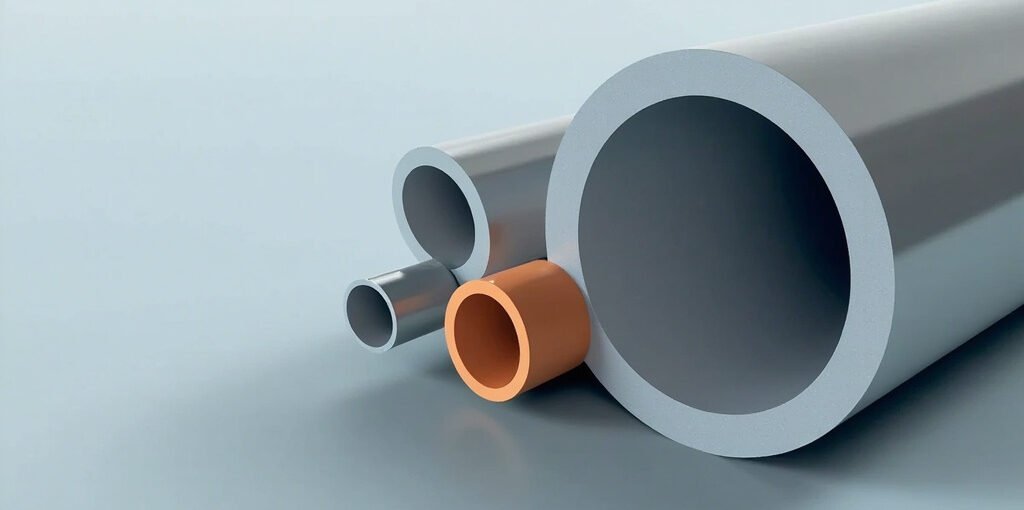
Pneumatic tube sizing is a critical engineering process that determines the optimal diameter, length, and configuration of tubes used to transport materials, gases, or fluids through compressed air systems. Whether you are designing a hospital carrier network, an industrial conveying system, or a factory automation line, proper pneumatic tube sizing directly impacts flow efficiency, energy consumption, system reliability, and operational costs. An undersized tube restricts flow and increases pressure drop, while an oversized tube wastes energy and capital investment. This comprehensive guide explores the principles, formulas, standards, and best practices for accurate pneumatic tube sizing across residential, commercial, and industrial applications.
What Is Pneumatic Tube Sizing?
Pneumatic tube sizing refers to the engineering analysis used to select the correct inner diameter (ID), outer diameter (OD), wall thickness, and routing length for tubes that carry compressed air, vacuum, or transported payloads. The goal is to maintain adequate pressure, velocity, and volume flow rate while minimizing friction losses, leakage potential, and material costs. Engineers rely on standardized equations such as the Darcy-Weisbach equation, Hagen-Poiseuille law, and manufacturer-specific sizing charts to achieve the desired performance.
Key Factors Influencing Pneumatic Tube Sizing
Several variables must be evaluated before calculating the final tube dimensions. Ignoring any of these can lead to underperformance or premature system failure.
- Operating Pressure: Higher pressures require thicker walls and may allow smaller diameters while still delivering required flow.
- Flow Rate (CFM/SCFM): The volume of air or gas per unit time dictates the minimum cross-sectional area.
- Tube Length and Routing: Longer runs and additional bends increase friction loss, requiring diameter compensation.
- Velocity Constraints: Compressed air systems typically maintain 20–30 ft/s to balance efficiency and noise reduction.
- Payload Weight and Size: In carrier systems, the transported object must fit comfortably with clearance margins.
- Material Compatibility: Tube material (PVC, aluminum, stainless steel, copper) affects friction coefficient and pressure rating.
- Temperature and Humidity: Environmental conditions alter air density and required sizing calculations.
Standard Pneumatic Tube Diameter Reference
The following table summarizes commonly used nominal tube sizes in pneumatic systems, their typical applications, and recommended maximum flow capacities. Always cross-reference manufacturer data sheets for project-specific tolerances.
| Nominal Size (inches) | Inner Diameter (mm) | Common Use Case | Max Flow (SCFM) | Recommended Velocity (ft/s) |
|---|---|---|---|---|
| 1/4″ | 6.35 | Small actuators, sensors | 15 | 20–25 |
| 3/8″ | 9.53 | Light tooling, control lines | 35 | 20–25 |
| 1/2″ | 12.70 | General pneumatic distribution | 70 | 25–30 |
| 3/4″ | 19.05 | Main supply lines | 150 | 25–30 |
| 1″ | 25.40 | Compressor headers, large actuators | 250 | 25–35 |
| 1-1/2″ | 38.10 | Hospital carrier systems, bulk conveying | 500+ | 30–40 |
Step-by-Step Pneumatic Tube Sizing Process
Follow this systematic procedure to size a pneumatic tube accurately for any application:
- Step 1: Define Requirements — Identify the required flow rate, operating pressure, and downstream equipment specifications.
- Step 2: Calculate Equivalent Length — Convert fittings, bends, valves, and other restrictions into equivalent straight-pipe lengths using resistance coefficient (C-value) tables.
- Step 3: Apply Pressure Drop Equations — Use Darcy-Weisbach to estimate pressure loss and adjust the diameter until ΔP falls within acceptable limits (typically ≤ 5% of operating pressure).
- Step 4: Verify Velocity — Confirm that air velocity remains within recommended ranges to prevent noise, erosion, and waterhammer.
- Step 5: Select Tube Material and Wall Thickness — Match pressure ratings, corrosion resistance, and temperature limits to the application environment.
- Step 6: Validate With Manufacturer Software — Always cross-check calculations using supplier-provided sizing tools or CAD libraries.
Common Sizing Formulas
Engineers use three primary equations when performing pneumatic tube sizing calculations. Each is suited to specific flow regimes and system geometries.
| Formula | Best Used For | Variables |
|---|---|---|
| Darcy-Weisbach | Turbulent flow, long pipe runs | ΔP, f, L, D, v, ρ |
| Hagen-Poiseuille | Laminar flow, capillary tubes | ΔP, μ, L, Q, r |
| Continuity Equation | Velocity to diameter conversion | Q = A × v |
Industry-Specific Sizing Considerations
Different industries impose unique constraints on pneumatic tube sizing. Below are the most common sectors where precision sizing is mission-critical.
Hospital Pneumatic Tube Systems
Categories
Best Practices for Industry 4.0 adoption – Expert Tips
June 23, 2026
-
-
-