Introduction
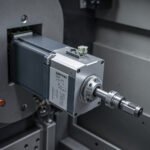
Selecting the right servo motor is crucial for achieving optimal performance in motion control applications such as CNC machine tools, robotics, and precision automation systems. The correct motor choice directly impacts dynamic performance, positioning accuracy, and thermal reliability. When considering servo motors, engineers must evaluate multiple factors including frame size, torque-speed characteristics, encoder resolution, and cooling methods. This article focuses on the Siemens SIMOTICS S series, specifically the 1FT7 and 1FK7 models, to provide a comprehensive guide for motion control engineers. By understanding these critical parameters, engineers can make informed decisions that ensure their automation systems operate efficiently and reliably.
Related Products:
Siemens 1FT7042-5AF71-1FH1 Servo Motor, Siemens 1FT7044-1AF71-1CH1 Servo Motor, Siemens 1FK7042-5AF71-1FG2 Servo Motor
The Siemens SIMOTICS S series is renowned for its high dynamic performance and precision, making it a popular choice for demanding applications. This article will delve into the key aspects of selecting the appropriate SIMOTICS S servo motor, providing technical insights and practical considerations to help engineers optimize their motion control solutions.
Siemens SIMOTICS S Product Range Overview
The Siemens SIMOTICS S product range is designed to meet the diverse needs of modern automation applications. It includes the high-dynamic 1FT7 series, the compact 1FK7 series, and the 1PH8 spindle motors, each offering unique advantages:
1FT7 High-Dynamic Servo Motors
The 1FT7 series (e.g., Siemens 1FT7042-5AF71-1FH1 Servo Motor) is engineered for applications requiring high acceleration and rapid positioning. These motors feature:
- Frame sizes from 40 to 180 mm
- IP64 and IP67 protection ratings for harsh environments
- High torque density for compact installations
- Wide speed range with field weakening capability
1FK7 Compact Servo Motors
The 1FK7 series (e.g., Siemens 1FK7042-5AF71-1FG2 Industrial Servo Motor Drive) is ideal for applications with limited space:
- Compact design with frame sizes from 40 to 100 mm
- Integrated encoder options for reduced footprint
- High power density in a small package
- Suitable for direct drive applications
1PH8 Spindle Motors
The 1PH8 series is optimized for machine tool spindle applications:
- High-speed capability up to 15,000 rpm
- High torque output for heavy-duty cutting
- Enhanced cooling options for thermal management
- Precision balanced for smooth operation
Frame Size Selection and Mounting Dimensions
Selecting the appropriate frame size is critical for ensuring proper motor performance and integration into the machine design. Key considerations include:
Shaft Height and Flange Type
The shaft height (e.g., 40 mm, 100 mm) determines the motor’s physical dimensions and torque capability. Larger frame sizes generally offer higher torque output. Flange types (e.g., B5, B14) affect the mounting configuration and should match the machine’s mounting requirements.
Overall Length vs. Torque Rating
Longer motors typically provide higher torque ratings due to increased winding space. Engineers must balance the available installation space with the required torque output.
Weight Considerations
Heavier motors may require more robust mounting structures and can affect the overall system dynamics. The weight of the motor should be considered when designing the machine frame and support structures.
Mounting Orientation
The mounting orientation (horizontal, vertical, or inclined) can impact the motor’s thermal performance and lubrication. Some motors may require additional cooling or lubrication modifications based on the mounting position.
Torque-Speed Characteristic Curve Analysis
Understanding the torque-speed characteristics is essential for proper motor sizing. Key parameters include:
Standstill Torque (S1)
The maximum torque the motor can deliver continuously at zero speed without overheating. This is crucial for applications requiring high starting torque.
Acceleration Torque (S6)
The torque available for short periods during acceleration and deceleration. It is typically higher than the standstill torque and is critical for dynamic applications.
Base Speed
The speed at which the motor delivers maximum power. Operating above base speed requires field weakening, which reduces torque capability.
Field Weakening Region
The speed range above base speed where the motor operates with reduced torque output. This region is important for applications requiring high-speed operation.
Load Inertia Ratio
The ratio of the load inertia to the motor inertia affects the system’s dynamic response. A proper match ensures stable and efficient operation.
Encoder System Selection
The encoder is a critical component that determines the motor’s positioning accuracy and speed control. Key considerations include:
Incremental vs. Absolute Encoders
- Incremental Encoders: Provide position information relative to a reference point. They are cost-effective but require homing at startup.
- Absolute Encoders: Provide exact position information without referencing. They are more expensive but offer faster startup and higher reliability.
HIPERFACE DSL
Siemens’ proprietary encoder interface that combines the benefits of digital communication with high resolution. It enables advanced features like condition monitoring and predictive maintenance.
Single-Turn vs. Multi-Turn Encoders
- Single-Turn: Provide position information within one revolution.
- Multi-Turn: Track the number of revolutions, useful for applications requiring absolute position over multiple rotations.
Resolution Impact on Positioning Accuracy
Higher encoder resolution (e.g., 20-bit) results in finer position control and smoother operation. The required resolution depends on the application’s precision requirements.
Cooling Method and Thermal Management
Proper cooling is essential for maintaining motor performance and longevity. Siemens SIMOTICS S motors offer various cooling options:
Natural Convection (A05)
Relies on ambient airflow for cooling. Suitable for low to moderate power applications.
Forced Ventilation (A06)
Uses an integrated fan to increase airflow and cooling capacity. Provides higher continuous torque output.
Water Cooling
Offers the highest cooling capacity for demanding applications. Requires a liquid cooling system but allows for maximum power density.
Thermal Time Constant
Indicates how quickly the motor heats up and cools down. A shorter time constant allows for more aggressive duty cycles.
Ambient Temperature Derating
Motors may require derating in high-temperature environments to prevent overheating. Proper thermal management is crucial for reliable operation.
Comparison Table: Siemens SIMOTICS S vs. Competing Servo Motors
| Parameter | Siemens SIMOTICS S | Beckhoff AM8000 | Fanuc alpha-iS | Mitsubishi HG-KR |
|---|---|---|---|---|
| Torque Density | High | Medium | High | Medium |
| Encoder Resolution | Up to 20-bit | Up to 18-bit | Up to 20-bit | Up to 20-bit |
| IP Rating | IP64/IP67 | IP65 | IP67 | IP67 |
| Communication Protocol | PROFINET, EtherCAT, PROFIBUS | EtherCAT, PROFINET | FANUC FSSB, EtherCAT | SSCNET III/H, EtherCAT |
| Cooling Options | Natural, Forced, Water | Natural, Forced | Natural, Forced | Natural, Forced |
FAQ
1. How do I determine the appropriate frame size for my application?
The frame size should be selected based on the required torque output, available installation space, and mounting requirements. Consider the shaft height, flange type, and overall length to ensure proper integration.
2. What encoder resolution do I need for my application?
The required encoder resolution depends on the positioning accuracy and speed control requirements. Higher resolution (e.g., 20-bit) is recommended for applications demanding precise positioning and smooth operation.
3. What cooling method should I choose?
The cooling method should be chosen based on the application’s power density and thermal management needs. Natural convection is suitable for low to moderate power applications, while forced ventilation and water cooling are better for high-power applications.
Conclusion
Selecting the right Siemens SIMOTICS S servo motor involves careful consideration of frame size, torque-speed characteristics, encoder system, and cooling method. By understanding these factors, engineers can optimize their motion control systems for dynamic performance, positioning accuracy, and thermal reliability. The Siemens SIMOTICS S series offers a range of options to meet the diverse needs of modern automation applications, from the high-dynamic 1FT7 to the compact 1FK7 and the powerful 1PH8 spindle motors.
For more information on specific models, visit the following links:
- Siemens 1FT7042-5AF71-1FH1 Servo Motor
- Siemens 1FT7044-1AF71-1CH1 Servo Motor
- Siemens 1FK7042-5AF71-1FG2 Industrial Servo Motor Drive
Make sure to consult with Siemens application engineers for detailed technical support and guidance in selecting the optimal motor for your specific application.