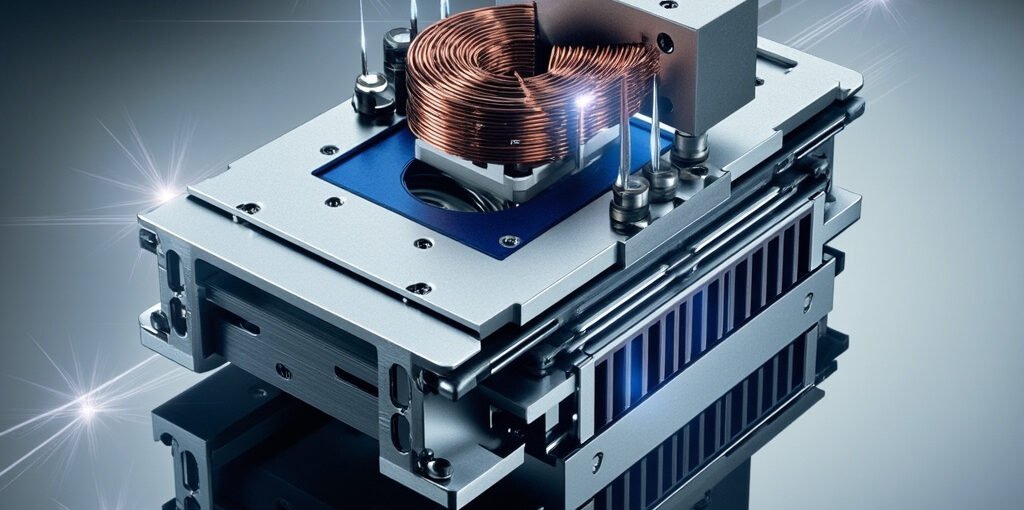
A voice coil motor platform (VCM platform) represents one of the most versatile and high-performance motion control solutions used in modern precision engineering. Combining the direct-drive benefits of a voice coil actuator with a stable mechanical structure, these platforms deliver exceptionally smooth, accurate, and rapid linear motion. Industries ranging from semiconductor manufacturing and optics to medical devices and aerospace rely on VCM platforms to achieve positioning repeatability measured in sub-micron increments. This comprehensive guide explores the architecture, working principles, applications, technical specifications, and selection criteria for voice coil motor platforms.
What Is a Voice Coil Motor Platform?
A voice coil motor platform is an electromechanical positioning system that uses a permanent magnet and a wound coil to generate linear force directly, without the need for mechanical transmission components such as ball screws, lead screws, or belts. The “voice coil” name originates from the loudspeaker industry, where similar coil-and-magnet arrangements produce sound. In motion control, however, the principle is repurposed to create highly responsive linear actuators mounted on a rigid platform.
Unlike rotary motors coupled with mechanical converters, a VCM platform operates on the Lorentz force principle. Current flowing through a coil placed within a magnetic field produces a force proportional to that current. Because the force is generated directly, there is no backlash, no hysteresis, and no mechanical wear from contact-driven components. This makes the platform ideal for applications requiring nanometer-level precision and extremely fast dynamic response.
How a Voice Coil Motor Platform Works
The operating principle of a VCM platform is based on the interaction between a current-carrying conductor and a permanent magnetic field. When electrical current passes through the coil, the resulting electromagnetic force pushes the coil relative to the magnet (or vice versa). The direction of motion reverses when current polarity changes, providing full bidirectional control.
- Magnetic Field Generation: High-energy neodymium or samarium-cobalt permanent magnets produce a strong, uniform flux density within the air gap.
- Coil Energization: A wound copper coil, typically moving-magnet or moving-coil type, sits within the magnetic flux path.
- Force Production: Current from a servo amplifier produces a Lorentz force (F = BIL), driving the moving element linearly.
- Feedback Control: Linear encoders, optical scales, or capacitive sensors provide closed-loop position feedback.
- Position Correction: The controller continuously adjusts current to maintain or change position with sub-micron accuracy.
Key Components of a VCM Platform
- Stator Assembly: Houses the permanent magnets arranged in a Halbach or traditional configuration to maximize flux density.
- Coil Assembly: A precision-wound bobbin or air-core coil optimized for thermal dissipation.
- Linear Bearing System: Crossed roller bearings, air bearings, or flexure guides ensuring frictionless motion.
- Position Sensor: High-resolution linear encoders (often optical or interferometric).
- Mechanical Frame: Rigid, low-mass base typically manufactured from aluminum, Invar, or granite.
- Controller & Driver: Servo amplifier and motion controller for closed-loop operation.
Technical Specifications Comparison
Different VCM platforms offer varying performance characteristics. The table below compares typical specifications across common platform categories:
| Parameter | Miniature VCM | Standard VCM | High-Force VCM |
|---|---|---|---|
| Stroke Length | 5 – 25 mm | 25 – 100 mm | 100 – 500 mm |
| Peak Force | 2 – 10 N | 10 – 50 N | 50 – 500 N |
| Position Resolution | 0.05 µm | 0.1 µm | 0.5 µm |
| Bandwidth | Up to 1 kHz | Up to 500 Hz | Up to 200 Hz |
| Repeatability | ±0.1 µm | ±0.25 µm | ±1 µm |
| Moving Mass | 0.1 – 0.5 kg | 0.5 – 3 kg | 3 – 25 kg |
Industrial Applications of Voice Coil Motor Platforms
The unique characteristics of VCM platforms make them indispensable in numerous high-tech sectors:
- Semiconductor Manufacturing: Wafer inspection, photolithography stages, and die bonding equipment.
- Optics & Photonics: Laser beam steering, adaptive optics, and fiber alignment systems.
- Medical Devices: Surgical robots, MRI-compatible scanners, and precision infusion pumps.
- Aerospace Testing: Vibration test platforms, flight simulator actuators, and satellite component testing.
- Hard Disk Manufacturing: Head positioning and high-speed servo testing.
- Pick-and-Place Machines: High-speed electronics assembly with micro-component placement.
VCM Platform vs. Other Linear Actuator Technologies
When choosing a positioning solution, engineers frequently compare voice coil motor platforms with ball screw, linear motor, and piezoelectric actuator systems. Each technology offers distinct trade-offs:
| Feature | VCM Platform | Ball Screw Actuator | Linear Motor | Piezoelectric |
|---|---|---|---|---|
| Stroke Range | Medium | Long | Long | Very Short |
| Resolution | Sub-µm | µm range | Sub-µm | Nanometer |
| Backlash | None | Some | None | None |
| Force Output | Medium | High | Very High | Low |
Sign in
Create an Account
|