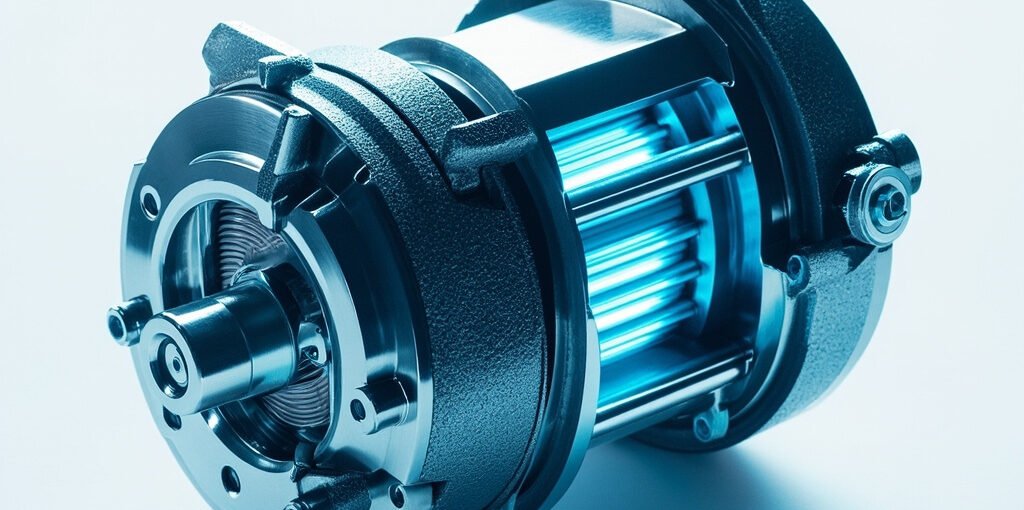
Selecting the right torque motor is a critical engineering decision that directly impacts the performance, efficiency, and longevity of motion control systems. Whether you’re designing a precision CNC machine, a robotics application, or an industrial automation system, choosing the appropriate torque motor requires careful evaluation of mechanical, electrical, and environmental factors. This comprehensive guide walks you through the essential considerations, parameters, and methodologies to make an informed torque motor selection that matches your specific application requirements.
A torque motor, also known as a direct-drive torque motor, is a specialized electromechanical device designed to deliver high torque at low speeds without requiring gear reduction. Unlike conventional servo motors that rely on gearboxes to increase output torque, torque motors deliver force directly to the load, eliminating backlash, reducing wear, and improving overall system accuracy.
What Is a Torque Motor?
A torque motor is a frameless or housed rotary motor optimized to produce maximum torque throughout its speed range, especially at low RPM. The direct-drive design means the rotor and stator couple directly to the machine’s moving components, providing exceptional stiffness, precision, and dynamic response. These motors are widely used in machine tools, semiconductor equipment, medical devices, and aerospace systems where precision and reliability are non-negotiable.
Types of Torque Motors
Understanding the different types of torque motors helps narrow down the selection based on application needs:
- Frameless Torque Motors: Consist only of rotor and stator components, allowing machine builders to integrate them directly into the mechanical structure. Ideal for compact, high-performance designs.
- Housed Torque Motors: Come with a complete housing, bearings, and shaft. Easier to install and replace, suitable for retrofitting existing systems.
- Synchronous Torque Motors: Use permanent magnets and operate synchronously with the supply frequency, offering high efficiency and precise control.
- Asynchronous (Induction) Torque Motors: More rugged and cost-effective, but typically offer lower torque density compared to synchronous designs.
- Axial Flux Torque Motors: Produce torque through axial magnetic flux paths, providing excellent power density in short-form-factor applications.
Key Selection Parameters
When performing torque motor selection, engineers must analyze several critical parameters. The table below summarizes the most important specifications:
| Parameter | Description | Typical Range |
|---|---|---|
| Continuous Torque | Sustained torque output without overheating | 1 – 5,000 Nm |
| Peak Torque | Maximum short-duration torque during acceleration | 2x to 4x continuous |
| Maximum Speed | Highest rated rotational speed | 500 – 10,000 RPM |
| Torque Density | Torque output per unit volume | 2 – 25 Nm/kg |
| Voltage Rating | Operating voltage range | 24V – 600V DC |
| Thermal Class | Insulation temperature rating | Class B, F, or H |
| Encoder Resolution | Position feedback accuracy | 17 – 26 bit |
Step-by-Step Selection Process
Follow this systematic approach to ensure an optimal torque motor selection for your application:
- Define the load profile: Calculate the inertia, friction, and external forces acting on the system. Identify peak and continuous torque demands throughout the duty cycle.
- Determine speed requirements: Establish the maximum and operating speed range, including acceleration and deceleration profiles.
- Evaluate space constraints: Measure the available mounting space, considering both radial and axial dimensions.
- Check thermal conditions: Assess ambient temperature, cooling options (natural convection, forced air, or liquid cooling), and duty cycle.
- Match with drive electronics: Ensure compatibility with the chosen servo drive, including voltage, current, and feedback protocols.
- Verify environmental ratings: Confirm IP rating, vibration tolerance, and suitability for the operating environment.
- Validate with simulation: Use manufacturer sizing tools or FEA software to verify performance under real-world conditions.
Application-Based Comparison
Different applications place unique demands on torque motors. The following table compares motor characteristics across common use cases:
| Application | Priority Parameter | Recommended Motor Type |
|---|---|---|
| CNC Rotary Tables | High torque density, precision | Frameless synchronous |
| Semiconductor Lithography | Sub-micron accuracy, smooth motion | Iron-core synchronous |
| Robotics Joints | Compact size, high torque | Housed axial flux |
| Medical Imaging | Low noise, reliability | Ironless synchronous |
| Wind Turbine Pitch Control | High reliability, weather resistance | Housed induction |
Common Mistakes to Avoid
Even experienced engineers can make costly errors during motor selection. Watch out for these pitfalls:
- Ignoring thermal limits: Selecting a motor based solely on continuous torque without verifying thermal dissipation can lead to premature winding failure.
- Undersizing peak torque: Failing to account for acceleration phases may cause the drive to trip or the motor to stall.
- Overlooking bearing load: Direct-drive systems transfer all radial and axial loads to the motor bearings, which must be rated accordingly.
- Mismatched feedback: Using a low-resolution encoder in a high-precision application will limit overall system accuracy regardless of motor quality.
- Neglecting cable effects: Long cable runs between the drive and motor can introduce voltage drops and EMI issues that degrade performance.
⚠ Expert Tip: Always include a safety margin of at least 20-30% above calculated torque requirements. This buffer accounts for unforeseen load variations, manufacturing tolerances, and thermal derating in real-world operating conditions. Sizing too close to the limit often results in reduced motor lifespan and costly downtime.
Performance Optimization Strategies
Categories
Best Practices for Technology trends in manufacturing in 2026
September 15, 2026
-
Unmanned Design: A Complete Guide to Autonomous Systems Engineering
September 12, 2026 -
-
Motor Pole Selection: A Complete Guide to Choosing the Right Motor Poles
September 8, 2026