In the world of industrial automation and control systems, protecting sensitive equipment from environmental hazards is paramount to ensuring reliability, longevity, and safety. One of the most critical specifications that engineers, procurement specialists, and maintenance professionals must understand is the Ingress Protection (IP) rating system. This standardized classification system provides essential information about an enclosure’s ability to prevent intrusion from solid objects and liquids. Whether you are specifying enclosures for programmable logic controllers (PLCs), motor drives, sensors, or entire control cabinets, selecting the appropriate IP rating can mean the difference between a trouble-free operation and costly downtime. This comprehensive guide explores everything you need to know about IP ratings for automation equipment, from understanding the rating structure to practical selection criteria for various industrial applications.
Understanding the IP Rating System
The IP rating system, officially known as IEC 60529 (International Electrotechnical Commission), is an international standard that defines the levels of sealing effectiveness of electrical enclosures against intrusion from foreign bodies such as dust and moisture. The rating consists of the letters “IP” followed by two digits, each representing specific protection characteristics. This system was developed to provide users with more detailed information about product protection than vague marketing terms like “waterproof” or “dust-tight,” enabling informed decisions based on standardized testing criteria.
First Digit: Solid Particle Protection
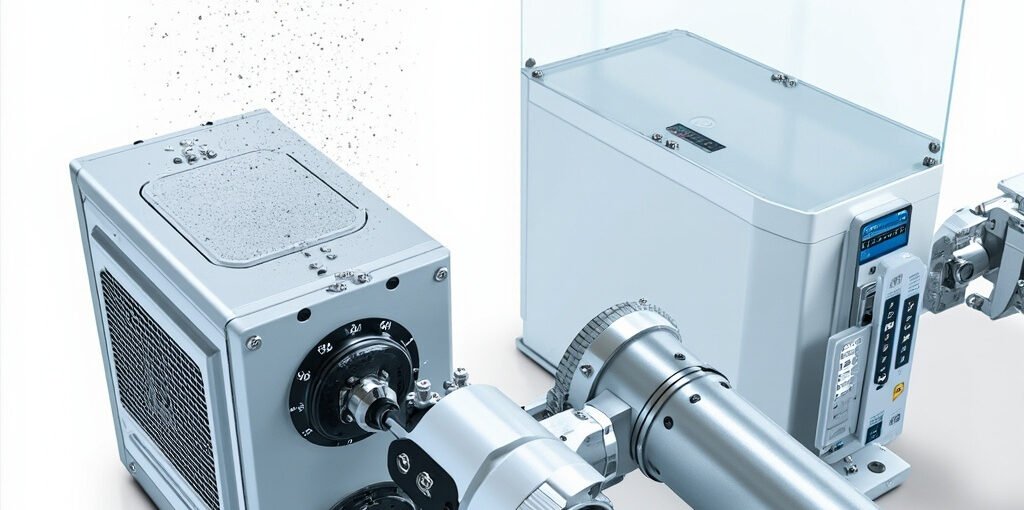
The first digit in the IP rating indicates the level of protection against solid objects and particles. This ranges from complete protection against any contact and ingress (level 6) to no special protection (level 0). Understanding these levels is crucial for automation equipment deployed in dusty environments such as woodworking facilities, grain processing plants, or cement manufacturing operations.
| Level | Protected Against | Effective Against |
|---|---|---|
| 0 | No protection | No protection against contact or ingress |
| 1 | Protected against solid objects larger than 50mm | Accidental touch by hands |
| 2 | Protected against solid objects larger than 12.5mm | Fingers or similar objects |
| 3 | Protected against solid objects larger than 2.5mm | Tools, thick wires, etc. |
| 4 | Protected against solid objects larger than 1mm | Most wires, screws, small insects |
| 5 | Dust protected | Ingress of dust is not entirely prevented, but no harmful deposits |
| 6 | Dust tight | Complete protection against dust ingress |
Second Digit: Liquid Ingress Protection
The second digit indicates the level of protection against moisture and liquids. This is particularly important for automation equipment that may be exposed to water from cleaning processes, condensation, oil mist, or outdoor installations. The scale ranges from no protection (level 0) to protection against high-pressure water jets and temporary submersion (levels 6 through 9).
| Level | Protected Against | Testing Conditions |
|---|---|---|
| 0 | No protection | No protection against liquids |
| 1 | Protected against dripping water | Vertical dripping water for 10 minutes |
| 2 | Protected against dripping water when tilted up to 15° | Water dripping for 10 minutes at four angles |
| 3 | Protected against spraying water | Water spray at up to 60° angle for 5 minutes |
| 4 | Protected against splashing water | Water splashed from any direction for 10 minutes |
| 5 | Protected against water jets | Water projected from 6.3mm nozzle for 3 minutes |
| 6 | Protected against powerful water jets | Water projected from 12.5mm nozzle for 3 minutes |
| 7 | Protected against temporary immersion | Immersion in water up to 1 meter for 30 minutes |
| 8 | Protected against continuous immersion | Immersion beyond 1 meter for extended periods (manufacturer-specified) |
| 9K | Protected against high-pressure, high-temperature water | High-pressure steam cleaning (ISO 20653 standard) |
Common IP Ratings for Automation Equipment
In industrial automation applications, certain IP ratings appear more frequently due to their suitability for common operating environments. Understanding which ratings are appropriate for specific applications helps streamline the selection process and ensures adequate protection without unnecessary cost escalation.
- IP20 – Basic protection suitable for controlled indoor environments such as climate-controlled control rooms and electrical rooms where dust and moisture are not concerns.
- IP54 – Dust protected and splash-proof, ideal for general factory floor equipment that may encounter light moisture or dust but not direct water exposure.
- IP65 – Dust-tight and protected against water jets; commonly specified for equipment enclosures, HMI panels, and sensors in demanding industrial environments.
- IP66 – Complete dust protection with powerful water jet resistance; suitable for outdoor automation equipment, washdown areas, and food processing applications.
- IP67 – Dust-tight with temporary immersion protection; used for equipment that may experience occasional flooding or require pressure washing.
- IP69K – Maximum protection against high-pressure steam cleaning; essential for pharmaceutical, food and beverage, and sanitary applications.
Industry-Specific Requirements
Different industries have unique environmental challenges that influence IP rating selection. Automation equipment in food and beverage manufacturing requires high IP ratings due to frequent washdown procedures and exposure to cleaning chemicals. The pharmaceutical industry demands even stricter standards to maintain sterile environments and prevent contamination. Meanwhile, oil and gas applications face challenges from explosive atmospheres, requiring combinations of IP ratings with explosion-proof certifications.
Food and Beverage Industry
The food and beverage sector presents some of the most demanding requirements for automation equipment protection. Equipment must withstand high-pressure washdown with sanitizing solutions, exposure to food particles and liquids, and temperature variations. Typical requirements include IP66, IP67, or IP69K ratings for enclosures in production areas, with stainless steel construction being standard. Materials must also comply with FDA regulations for food contact surfaces.
Pharmaceutical and Cleanroom Applications
Pharmaceutical cleanrooms require equipment that prevents any particle generation or microbial ingress. While IP ratings provide mechanical protection, cleanroom equipment often exceeds these standards with additional air filtration and positive pressure systems. Standard automation enclosures typically require IP54 or higher, with critical components housed in sealed cabinets meeting stricter internal cleanliness classifications.
Outdoor and Harsh Environment Applications
Automation equipment deployed outdoors faces exposure to rain, snow, dust storms, temperature extremes, and UV radiation. Solar farming installations,